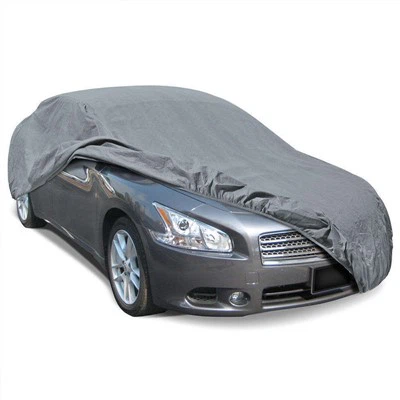

Hey there! As a vehicle cover supplier, I often get asked about the water - repellency level of our covers. It's a super important factor, especially if you're looking to protect your precious vehicle from the elements. So, let's dive right into it and break down what water - repellency really means for vehicle covers.
Understanding Water - Repellency
First off, water - repellency is all about how well a material can keep water from soaking through. It's not the same as waterproof, though. Waterproof materials completely block water, while water - repellent materials resist it to a certain degree. When it comes to vehicle covers, the water - repellency level can make or break their effectiveness in protecting your car.
Factors Affecting Water - Repellency
There are a few things that determine the water - repellency of a vehicle cover. The material is a huge factor. Different fabrics have different levels of natural water - resistance. For example, some synthetic materials are inherently more water - repellent than others.
The treatment of the material also plays a big role. Many vehicle covers are treated with special coatings to enhance their water - repellency. These treatments can create a barrier that causes water to bead up and roll off the cover, rather than soaking in.
Another factor is the weave of the fabric. A tight weave can prevent water from seeping through more effectively than a loose one.
Types of Vehicle Covers and Their Water - Repellency
Non - woven Fabric Car Cover
Non - woven fabric car covers are a popular choice. They're lightweight and often quite affordable. The water - repellency of Non - woven Fabric Car Cover can vary. Some non - woven fabrics have a basic level of water - resistance, but they might not be as effective in heavy rain or long - term exposure to moisture. However, with proper treatment, they can offer a decent level of protection.
Oxford Cloth Car Cover
Oxford cloth is known for its durability and relatively good water - repellency. Oxford Cloth Car Cover usually has a tight weave, which helps to keep water out. Many Oxford cloth covers are also treated with water - repellent coatings. This combination makes them a great option for protecting your vehicle from light to moderate rain.
Polyester Fabric Car Cover
Polyester is a synthetic material that has natural water - repellent properties. Polyester Fabric Car Cover can be very effective at repelling water. It's also resistant to mildew and UV rays, which are important factors in protecting your vehicle. Some high - end polyester covers are treated with advanced water - repellent technologies, making them suitable for all kinds of weather conditions.
Testing the Water - Repellency
We at our company take the water - repellency of our vehicle covers very seriously. We conduct various tests to ensure that our covers meet high standards. One common test is the spray test. We spray water on the cover at a certain pressure and observe how the water behaves. If the water beads up and rolls off, it's a good sign that the cover has a high level of water - repellency.
Another test is the immersion test. We submerge a sample of the cover in water for a certain period and then check for any signs of water penetration. This helps us to determine how well the cover can withstand more extreme conditions.
Choosing the Right Vehicle Cover Based on Water - Repellency
When you're choosing a vehicle cover, you need to consider your local climate. If you live in an area with heavy rainfall, you'll want a cover with a high water - repellency level, like a well - treated polyester or Oxford cloth cover. On the other hand, if you only experience light showers, a non - woven fabric cover might be sufficient.
You also need to think about how often you'll be using the cover. If you're going to leave your vehicle covered for long periods, a more water - repellent cover is a must.
Maintaining the Water - Repellency
To keep your vehicle cover's water - repellency at its best, you need to take proper care of it. Regular cleaning is important. Dirt and debris can reduce the effectiveness of the water - repellent coating. Use a mild detergent and gently wash the cover. Avoid using harsh chemicals that could damage the coating.
After cleaning, make sure the cover is completely dry before storing it. Moisture can cause mildew and reduce the water - repellency over time.
Conclusion
So, there you have it! The water - repellency level of a vehicle cover is crucial for protecting your vehicle from water damage. Whether you choose a Non - woven Fabric Car Cover, Oxford Cloth Car Cover, or Polyester Fabric Car Cover, understanding the water - repellency and how to maintain it is key.


If you're in the market for a high - quality vehicle cover, we're here to help. We offer a wide range of covers with different water - repellency levels to suit your needs. Contact us for more information and let's start the conversation about getting the perfect cover for your vehicle.
References
- Textile Testing Handbook: A Guide to Physical Testing of Textile Fibres, Yarns and Fabrics by David J. Hall
- Automotive Finishes and Coatings: Science and Technology by John W. S. Hearle